
Nobody calls us the first time a drain gurgles. They call two weeks later, when the garden smells and there’s a puddle by the back door that wasn’t there before. I get it — a gurgle after the washing machine finishes isn’t exactly a five-alarm fire. But it’s usually the only warning you get before a blocked drain turns from “notice it, ignore it” into “why is there water coming up through the patio.”
This is what I’d tell a neighbour who asked, not a customer. What actually causes it, how to tell if it’s serious, and where the line is between “sort it yourself tonight” and “put the kettle down and ring someone.” If it turns out to be more than a DIY job, that’s what our drain unblocking service is for.
Signs your drain is blocked
Gurgling is the first one, almost always. Air trapped behind standing water further down the pipe, pushed back up when you empty a sink or flush. On its own it’s not much to worry about.
Slow draining is next, and it creeps — a bath that used to empty in thirty seconds now takes three minutes, then five, over a week or two. Then the smell turns up, usually somewhere between two and three days after whatever’s stuck in there starts rotting. You’ll notice it near a gully or a manhole cover before you notice it indoors.
The one that actually gets people moving is water backing up somewhere it shouldn’t. Flush the toilet and the bath gurgles, or fills slightly. That means the blockage is downstream of both fixtures, and it’s not going to fix itself by waiting.
Gurgling
Air pushed back through standing water after you flush or empty a sink.
Slow draining
Gets a little worse each day rather than happening all at once.
Bad smell
Trapped waste starts to smell within two or three days, gully or indoors.
Standing water
Still sitting in the gully an hour or two after the rain’s stopped.
Backing up elsewhere
Flush the loo and the bath gurgles — downstream of both.
Rule of thumbGurgling and slow draining — deal with it this weekend. Smell and backing up between fixtures — deal with it now.
What actually causes it
Fat is the big one. Not fat that’s been sitting there for years — fat poured in warm last Tuesday, that’s already cooled and hardened by the time it reaches the bend in the pipe. Every pour after that sticks to the last one. This is the cause behind most kitchen blockages and a good chunk of the ones that back up further along a shared line — Water UK puts a lot of the sewer blockages they deal with down to exactly this.
Wipes are the other big one, and I’ll say the thing every drainage engineer says: “flushable” on the packet means it goes down the toilet, not that it breaks down once it’s there. It doesn’t. WRAS guidance has said for years that nothing except toilet paper should go down a toilet, and wipes are the number one reason that guidance exists.
Outside, it’s usually leaves and silt sitting in an uncovered gully — worse in autumn, obviously, and it sets almost solid if it isn’t cleared before the first proper frost. Tree roots are a smaller share of call-outs but a bigger headache when they turn up, because they get in through a crack that was already there and then make the crack worse. Scale does the same thing over years in hard-water areas rather than weeks — the pipe just gets narrower and narrower until it doesn’t take much to finish the job. And sometimes the drain itself has moved: ground settling, nearby digging, just age, and a section that used to line up cleanly no longer does, so anything passing through catches on the edge.
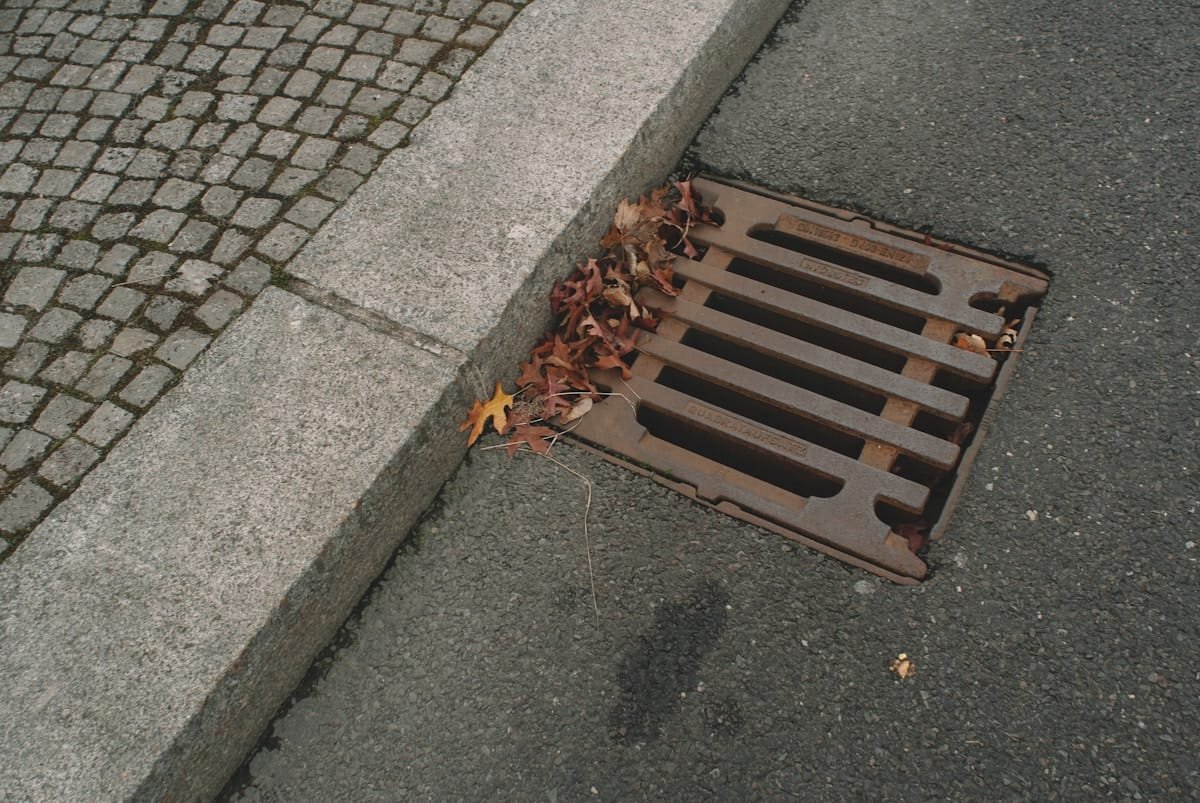
Outside drain or inside drain — different problem
A blocked outside drain pipe rarely has anything to do with fat or wipes — those don’t usually travel that far from the house. It’s leaves, silt, roots, or occasionally a pipe that’s shifted underground. Lift the gully grate before you do anything else. Genuinely, most of the time the whole problem is sitting right there on top, visible, and clearing it is a five-minute job with your hands and a bucket.
Inside, it’s almost always fat, soap scum, hair, or something that shouldn’t have been flushed, and the usual hot-water-then-plunger routine that works on a kitchen sink will work here too.
Is it yours to fix, or the water company’s?
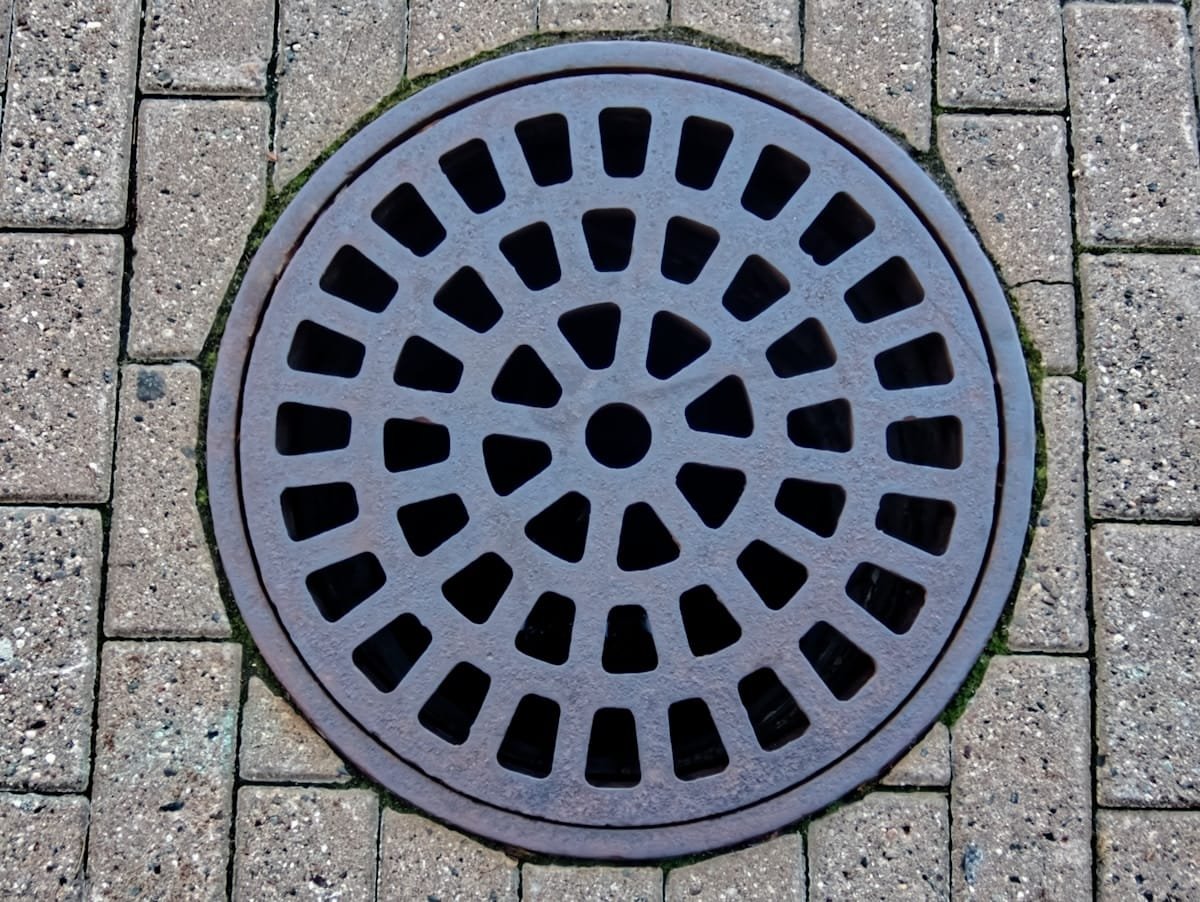
A drain that only serves your house is your responsibility, full stop. Once it joins a neighbour’s pipe — under a shared driveway, along a garden boundary, out toward the road — it becomes a shared drain or a public sewer, and clearing that one is down to your water company, not you. Thames Water’s guidance on this is a reasonable summary of how the split generally works across the country, even if you’re with a different supplier.
Lift the nearest inspection chamber and have a look. Empty or low, the blockage is between there and the house — yours. Full right up to the cover, it’s downstream, toward the shared connection, and worth a call to the water company before you pay anyone privately to look at it.
If it’s not just your house — if next door’s having the same problem at the same time — that’s basically confirmation it’s a shared issue, not something in your own pipework.
Fixing it
Hot water first, then bicarb and vinegar, then a plunger. Rods come last, and only once you’ve actually looked in the inspection chamber and have some idea where the blockage is.
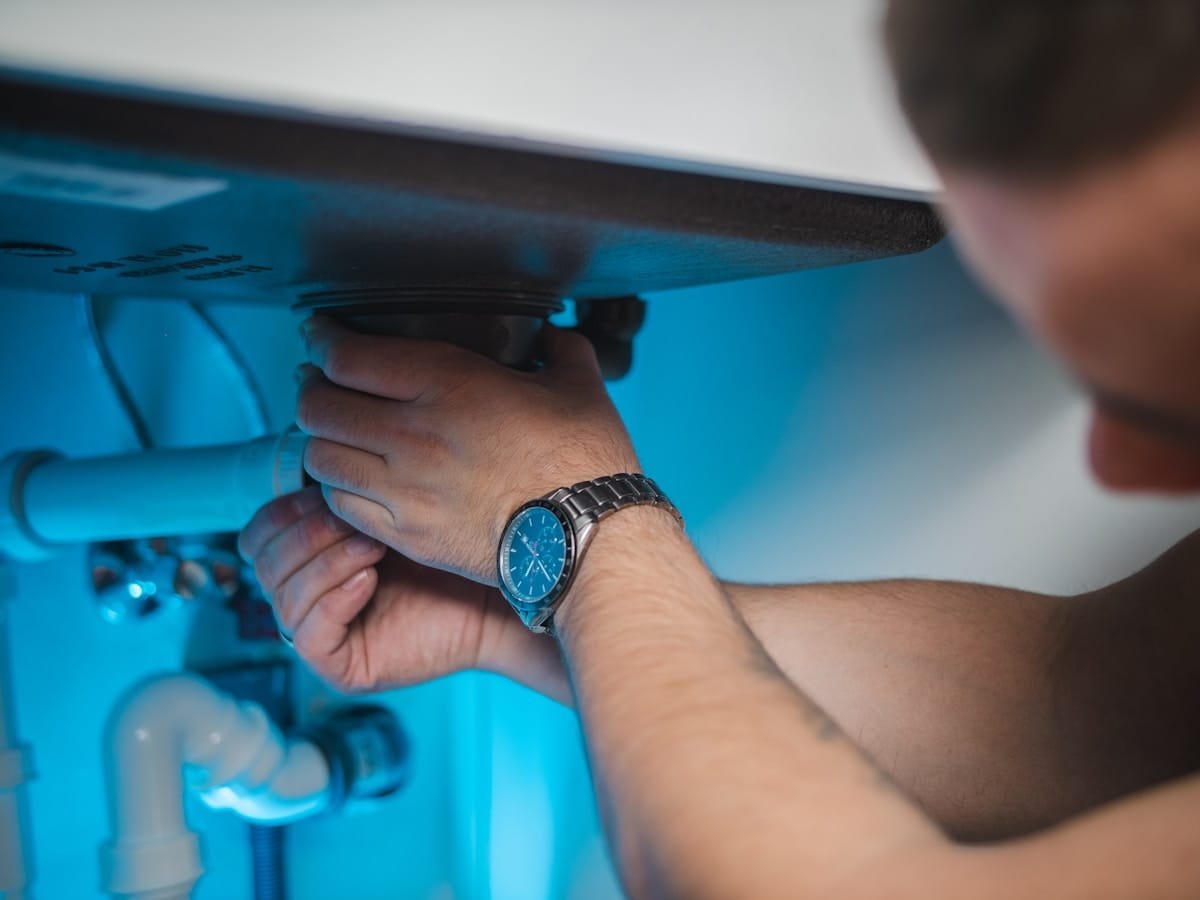
When to stopGoing in blind with rods is how people crack pipes that were fine until someone forced a rod through a joint that had already started to fail. If you’ve hit something you don’t recognise, stop rather than push harder.
We’ve laid out the whole method properly, step by step, in how to unblock a drain — including exactly when to stop.
And if you’ve already tried a few of those and hit something you don’t recognise, don’t keep going out of stubbornness. That’s usually the point where calling someone costs less than continuing to guess.
What it costs
Outside drains tend to run a bit more once jetting’s involved, mostly depending on how far the blockage is from an accessible chamber. Our drain unblocking cost guide breaks it down properly by job type if you want the detail.
A job that wasn’t what it looked like
Had a call last winter from a landlord in Redhill — tenant’s kitchen sink had gone from slow to completely blocked overnight, and the tenant was fairly sure it was down to cooking a lot that week. Fair guess, honestly, that’s usually right.
It wasn’t right this time. Sink trap was clean when we pulled it. Turned out the actual problem was a few metres out into the garden run, where a section of clay pipe had shifted slightly — some patio work done the year before had disturbed it more than anyone realised at the time.
Fat build-up had been catching on that displaced edge for a while, narrowing the pipe bit by bit, and the kitchen use that week was just what finally tipped it over rather than the actual cause.
We jetted it clear rather than rodding, because rodding a joint that’s already moved tends to shift it further. Recommended a CCTV survey to check the pipe hadn’t cracked, which it hadn’t, luckily. Landlord’s bill came to a bit over £250 all in, which he said was still cheaper than the plumber he’d have called for a “simple blockage” that would’ve missed the real problem entirely. If you’re around Redhill, our local team covers that area — same goes for Chislehurst and Hornchurch.
Quick questions
?What’s the fastest way to clear a blocked drain?
Boiling water, poured slowly in two goes, works on most fat-based blockages within a few minutes. Follow it with bicarb and vinegar if it hasn’t cleared — give that fifteen minutes or so before flushing through again. Between the two you’ll shift the majority of household blockages inside an hour, no tools needed.
?How do I clear a blocked drain outside my house?
Check the gully grate first, before anything else — leaves and silt sitting on top account for most of these. If it’s clear underneath and still not draining, try hot water, then check the nearest inspection chamber before reaching for rods.
?Will it get worse if I just leave it?
Usually, yes. Pressure builds up behind a blockage and finds the weakest point in the system — often a joint that was already slightly worn. What starts as a gurgle can end up as a cracked pipe or water coming up somewhere you really don’t want it.
?Is it an emergency?
A slow sink, no. Sewage coming back into the house, several fixtures blocked at once, or water getting in from outside — yes, and that’s a same-day call, not a Monday-morning one.
If you’ve been through all of the above and you’re still not sure what you’re looking at, get in touch and describe what you’re seeing. We’ll tell you honestly whether it’s a five-minute job or something that needs a proper look.
